Case Studies Industry Technology
Fiber Optic Tailings Dam Monitoring Moves From Pilot to Practice

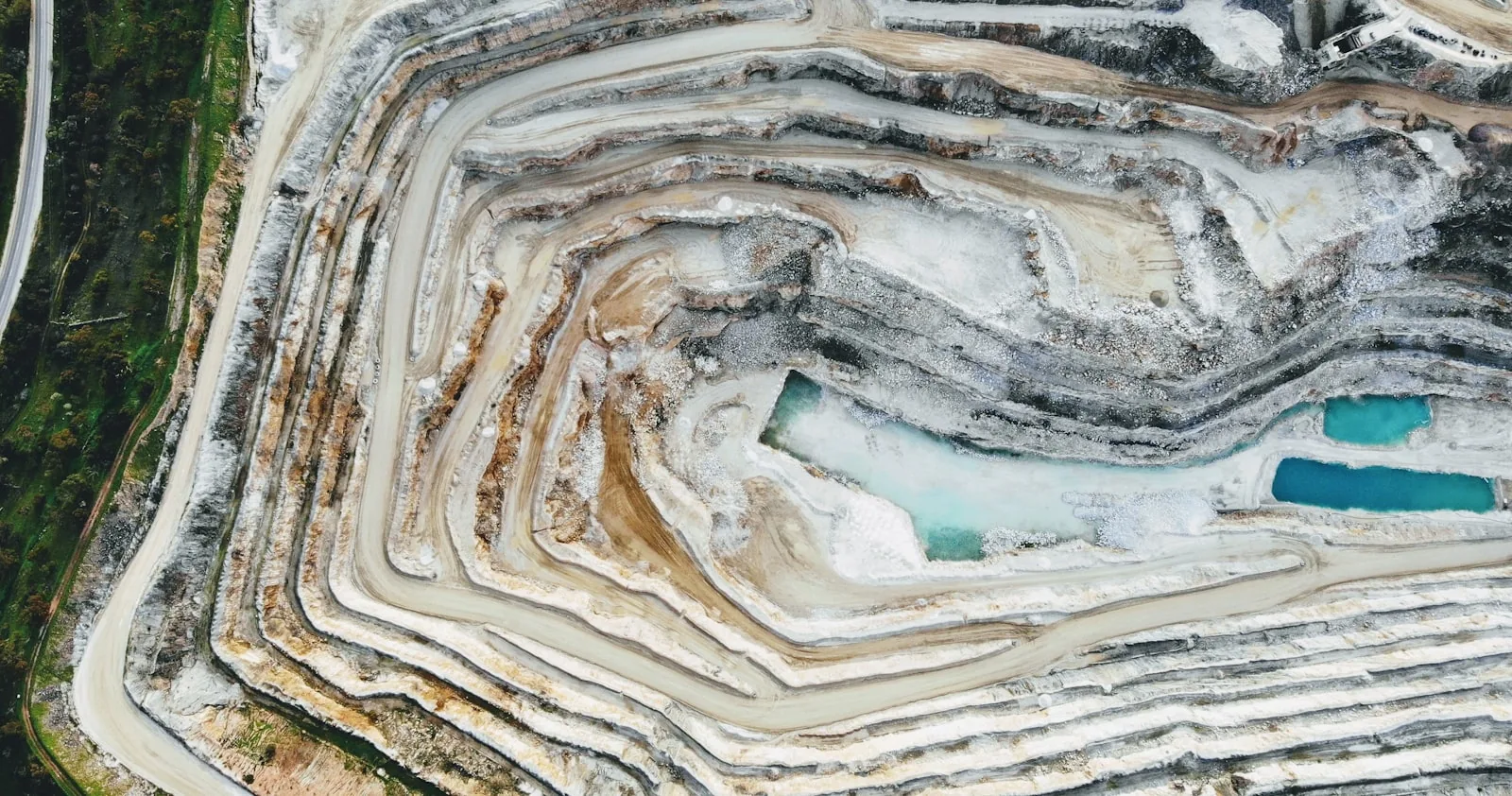
A European Union-funded research project called MOSMIN has installed distributed acoustic sensing cables inside the tailings dam at Codelco’s Chuquicamata mine, near Calama, Chile. The goal is direct: map the internal structure of the dam and flag weak zones early. In other words, the project aims to find problems before they turn into failures. Overall, this is one of the clearest signs yet that fiber optic tailings dam monitoring is moving out of research pilots and into working mine sites in Latin America.
The timing lines up with two separate trends. First, the global market for distributed fiber optic sensors was worth an estimated USD 1.8 billion in 2026. It is projected to reach USD 3.9 billion by 2033, according to a report based on Grand View Research data published on August 31, 2026 (Express Press Release, 2026-08-31). Acoustic and vibration sensing is named as the fastest growing segment within that market. Second, mining regulators across Latin America keep raising the bar on dam safety after a string of historical failures. As a result, operators are actively looking for monitoring technology that goes beyond a handful of piezometers and an annual visual inspection.
This article looks at what the Chuquicamata pilot actually did. In addition, it covers why tailings dam safety technology has become a regional priority. Finally, it lays out what an operator should check before treating fiber optic tailings dam monitoring as more than a research topic.
What the MOSMIN Project Found at Chuquicamata
MOSMIN installed fiber optic cables at two sites: the Chuquicamata tailings dam in Chile and the FQM Sentinel site in Zambia. In both cases, a commercial Distributed Acoustic Sensing system interrogated the cables. Specifically, the purpose was to characterize the internal structure of each dam and identify weak zones that conventional instruments might miss (European Geosciences Union, EGU General Assembly 2026).
Chuquicamata matters on its own terms. It is a first-tier copper operation run by Codelco, not a small test site. In addition, it sits in the same region where most prospective users of this technology already operate. The project treats the fiber cable as a continuous line of sensors, not a set of isolated points. That distinction matters for dam safety, since a weak zone can form between two conventional instruments and go undetected for years.
Why Tailings Dam Safety Technology Is a Regional Priority Now
Brazil offers the clearest regulatory picture. In total, the country counts 911 mining sector dams. Between 2024 and 2025, the number of dams in alert or emergency status fell from 109 to 90, an 18 percent drop. Meanwhile, the number of dams still using the banned upstream construction method fell from 52 to 45 (IBRAM, 2026-05-26). Pablo Cesário, CEO of IBRAM, presented those figures at the opening of Tailings Brazil 2026 as evidence that enforcement is producing measurable change.
Those numbers point to a broader pattern. Regulators are not asking mining companies to add one more inspection. Instead, they want continuous evidence that a dam is stable. Fiber optic tailings dam monitoring fits that requirement well, because it produces a constant stream of data instead of a periodic snapshot.
How Distributed Acoustic Sensing Mining Applications Work
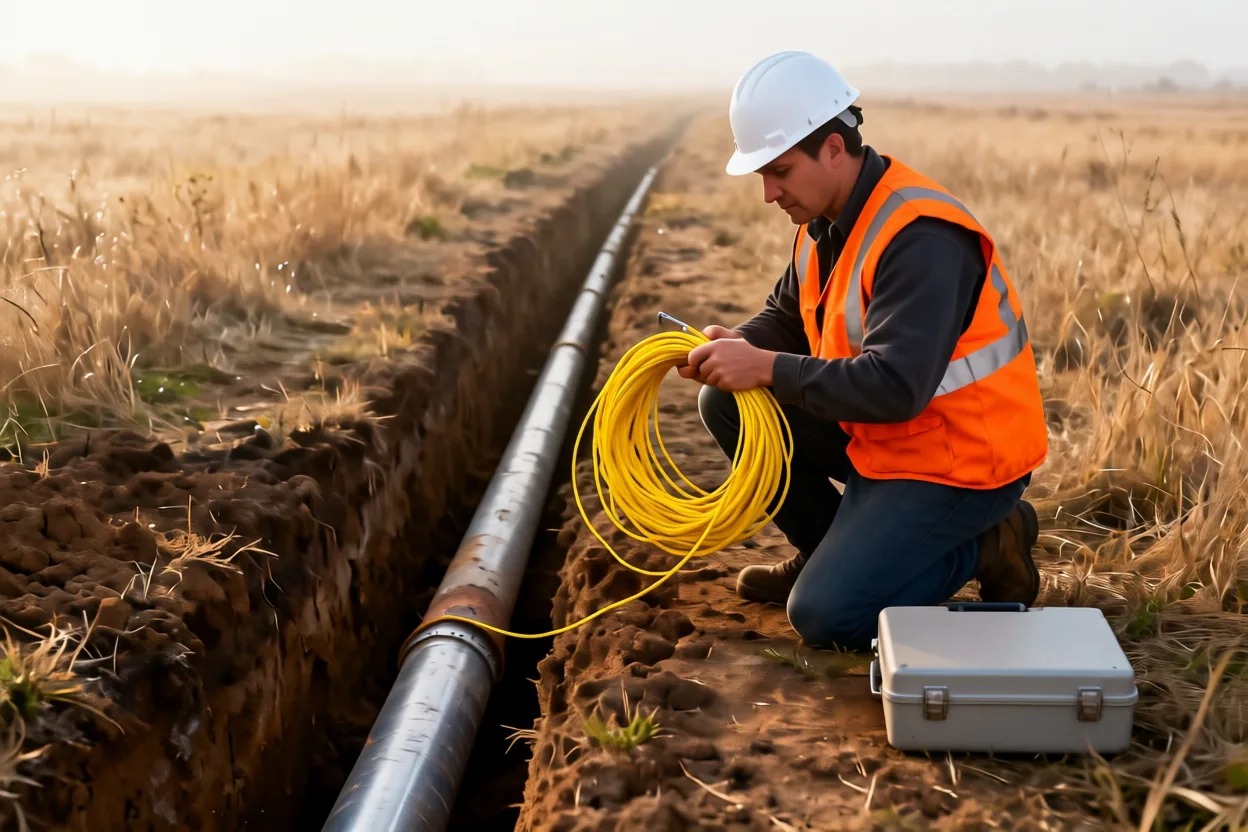
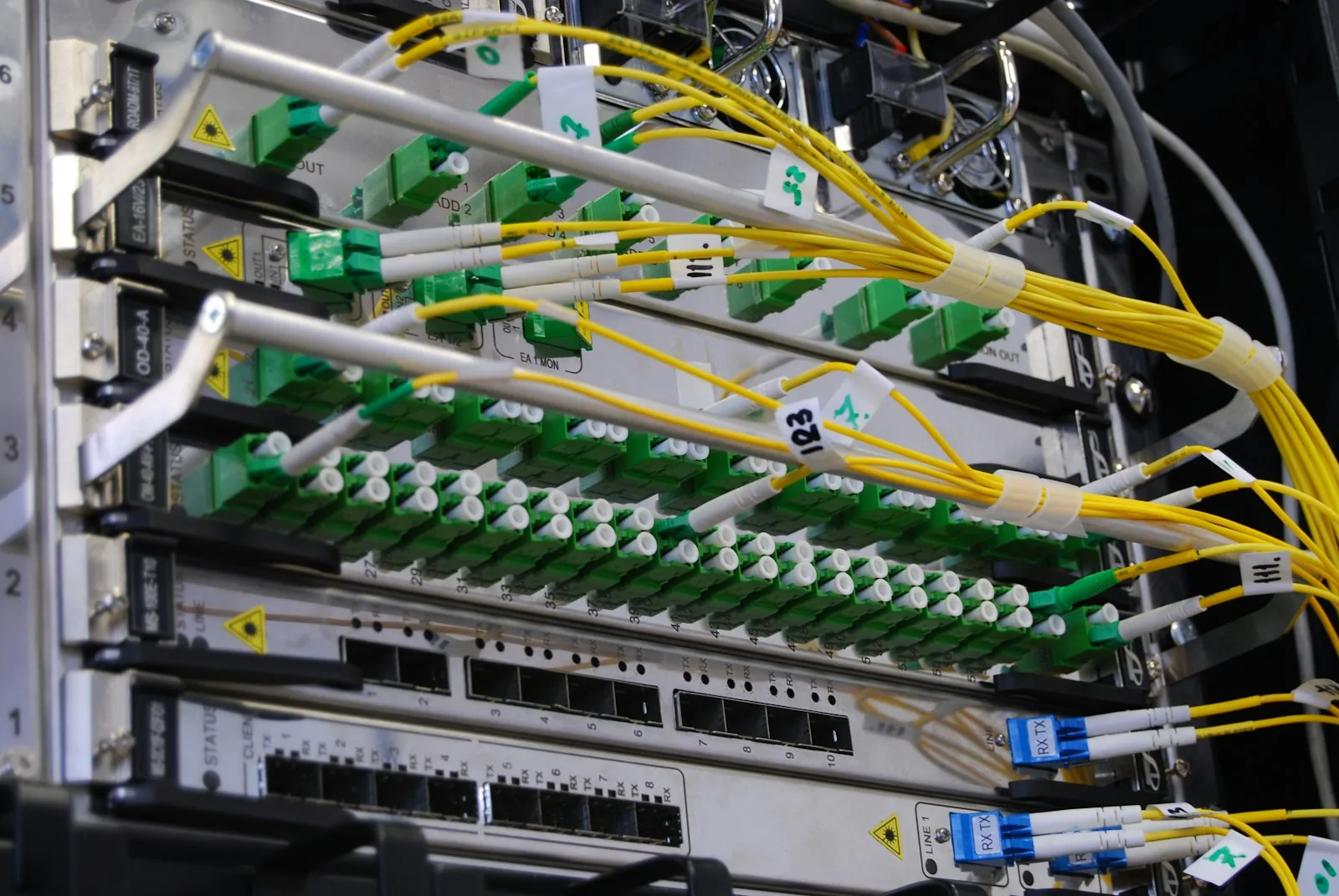
Distributed acoustic sensing mining deployments use a single fiber optic cable as the sensing element itself. Typically, the cable is already buried within or around the dam structure. From there, an interrogator unit at one end sends laser pulses down the cable and reads how the light scatters back. As a result, any strain, vibration, or temperature change along the cable’s path alters that return signal.
In practice, this means one cable can report on seepage-related acoustic activity, temperature shifts, and mechanical strain across kilometers of dam face at once. That is different from a piezometer network, which only reports on the exact points where instruments were installed. However, this also means the cable route needs careful planning during construction or retrofit. A section of dam without cable coverage is, simply, a section without data.

Commercial Systems Are Already Deployed, Not Just Tested
Fiber optic tailings dam monitoring is not confined to research consortiums. Silixa markets DamPulse, a system that installs fiber cables inside tailings dams. It tracks temperature, tension, seepage, and acoustic data in real time, with automatic alarms sent by SMS or email when readings shift suddenly (Silixa). The company has documented a deployment at the Hötjärn dam in Sweden, where the system runs as day-to-day infrastructure rather than a pilot (Mining Technology, 2024-08-02).
For an operator evaluating this space, that combination matters. An EU-funded pilot validated the approach on a major Latin American copper mine. Meanwhile, a commercial product already runs on an operating dam in Europe. Neither case is theoretical.
What This Means for Latin American Operators
No public source in this research shows a commercial fiber optic tailings dam monitoring deployment yet at a Latin American mine, outside the MOSMIN pilot itself. That gap is the opportunity. BiiSensing is the first company in Latin America built specifically around distributed fiber optic sensing and the data it produces. Its technical roots are in pipeline and transmission line monitoring across the region. Therefore, that background extends directly to dam applications, since the underlying method, strain and acoustic signal analysis over a continuous fiber line, stays the same.
An operator does not need to commit to a full system just to find out whether this approach fits a specific dam. A viability assessment of the tailings structure is a smaller first step. For example, a proof of concept can run on fiber that is already installed nearby for other purposes. That answers the practical question before any large commitment: does this dam produce a signal worth monitoring, and where should the cable run.
Where to Start Before the Next Inspection Cycle
The IBRAM figures show that regulatory pressure on tailings dams is already producing change in the region’s largest mining market. Therefore, waiting for a mandate before evaluating continuous monitoring is a slower path than starting the technical review now. A realistic first step is a site-specific viability review. This means checking what fiber already exists near the dam, mapping what a new cable route would need to cover, and defining what a proof of concept on an existing dam segment would show before any full deployment.
BiiSensing can support that first step. This can range from an initial feasibility read on a specific tailings structure, through a proof of concept on fiber already in place, and on to full deployment planning where the data supports it. No timeline or cost can be promised without seeing the site. However, the core technical question, whether a given dam is a good candidate for continuous fiber monitoring, can be answered before committing to anything larger.