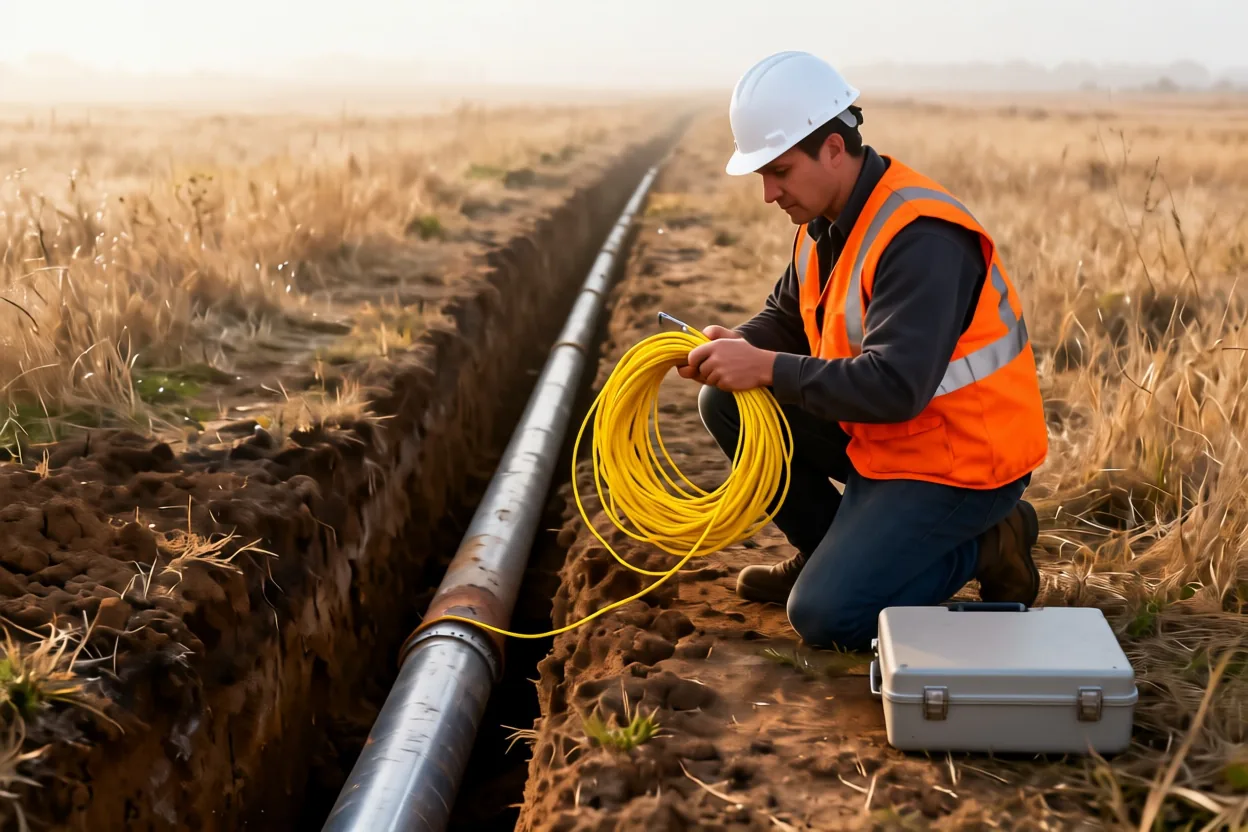
Fiber Optic Pipeline Monitoring: Detecting Leaks Before They Happen

Pipeline operators face a persistent challenge: leak detection systems that rely on flow-rate anomalies or manual inspection can take hours — or days — to identify a breach. By that point, environmental damage and economic losses are already significant (NTSB, Marshall pipeline rupture report). Fiber optic pipeline monitoring changes the equation entirely.
The Challenge
A water utility managing 340 km of high-pressure transmission mains needed a monitoring solution that could detect leaks within minutes, locate them to within a few meters, and distinguish genuine anomalies from routine operational noise — all without disrupting service or requiring personnel on-site.
The Pipeline Monitoring Solution
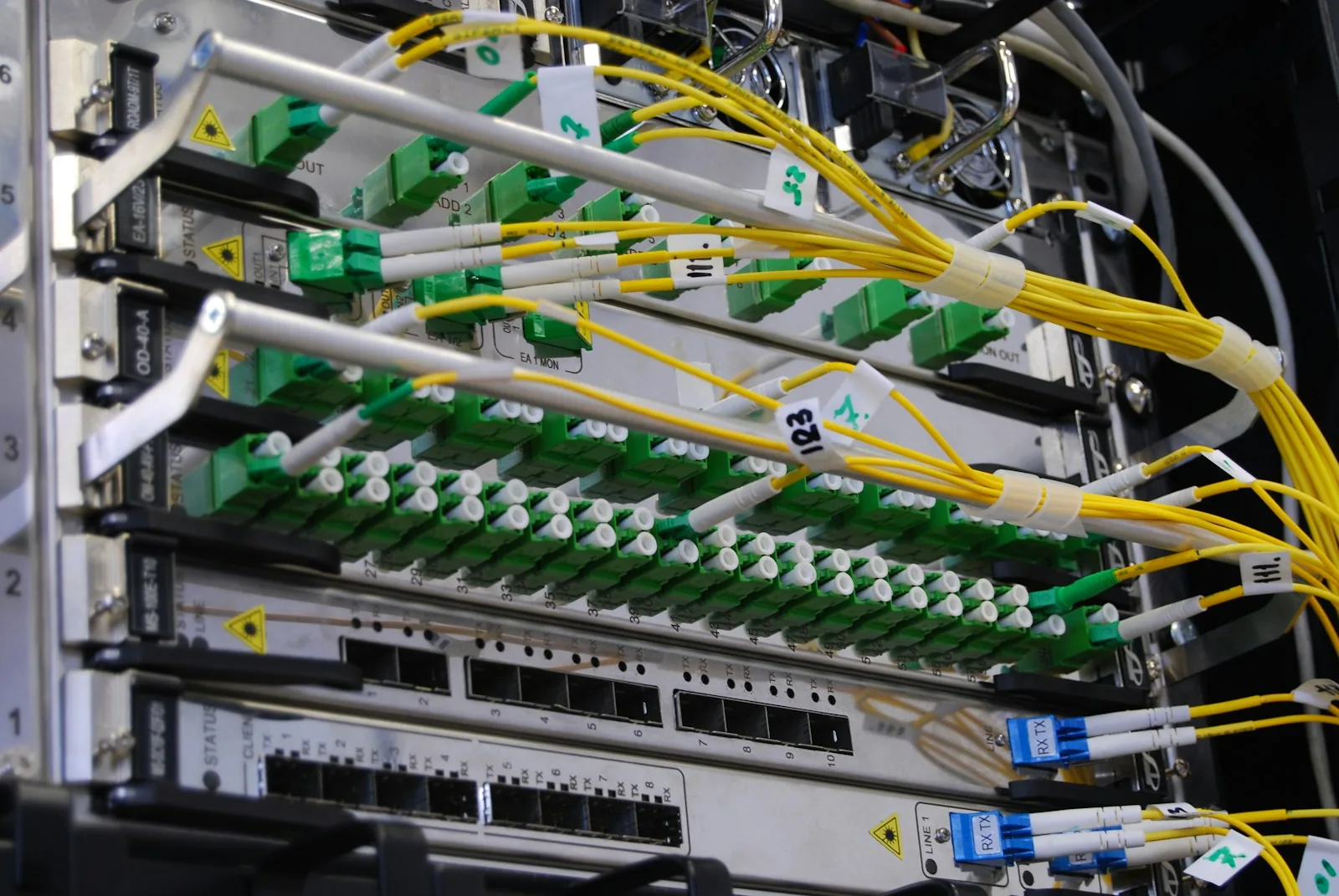
BiiSensing deployed the Eagle DAS system using fiber already installed in the cable sheaths of the pipeline. A single interrogator unit in the control room monitored the entire 340 km corridor in real time, which is the coverage pipeline monitoring on fiber is built around. The system’s machine learning classifier was trained on the acoustic signatures of known leak types, valve operations, and environmental interference — producing a low false-alarm rate from day one.
Results
- Three leak events detected within 4 minutes of onset during the 12-month pilot period
- Location accuracy within 2 meters, eliminating the need for extended excavation searches
- Zero false positives requiring emergency crew dispatch
- Estimated water loss reduced by 94% compared to the previous monitoring regime
Why Fiber Outperforms Point Sensors for Pipeline Monitoring
Installing acoustic sensors at every vulnerable point along a 340 km pipeline would require hundreds of devices and thousands of connection points — each a potential failure. Fiber sensing achieves higher coverage density at a fraction of the capital and ongoing maintenance cost, while delivering continuous data rather than periodic readings.
The starting question for fiber optic pipeline monitoring is usually not the instrument but the cable: whether a spare strand already runs along the route. Where it does, coverage starts from an existing equipment room with no civil works. See the full approach on our pipeline solution page and the Eagle DAS interrogator behind it.
Talk to an Engineer and tell us what you need to monitor. We will tell you whether fiber sensing is the right fit, and how to deploy it.
Frequently asked questions
What problem does fiber optic pipeline monitoring solve?
Leak detection systems that rely on flow-rate anomalies or manual inspection can take hours or days to identify a breach, and by that point environmental damage and economic losses are already significant. Fiber optic pipeline monitoring watches the route continuously and in real time, delivering continuous data rather than periodic readings.
Why use fiber instead of point sensors on a long pipeline?
Installing acoustic sensors at every vulnerable point along a long pipeline would require hundreds of devices and thousands of connection points, each a potential failure. Fiber sensing achieves higher coverage density at a fraction of the capital and ongoing maintenance cost, and it delivers continuous data rather than periodic readings.
Does pipeline monitoring require laying new fiber?
Not necessarily. The starting question is usually not the instrument but the cable: whether a spare strand already runs along the route. Where it does, coverage starts from an existing equipment room with no civil works, which is why the fiber records are worth checking before anything else.