Fiber Optic Leak Detection in Water Distribution Networks

Water utilities lose a large share of everything they treat before it reaches a customer (World Bank), and most of it disappears through leaks nobody has found yet. Fiber optic leak detection changes the economics of that problem by turning the pipeline itself into a continuous sensor, rather than sending crews to listen at access points once a quarter.

Why leaks stay hidden for so long
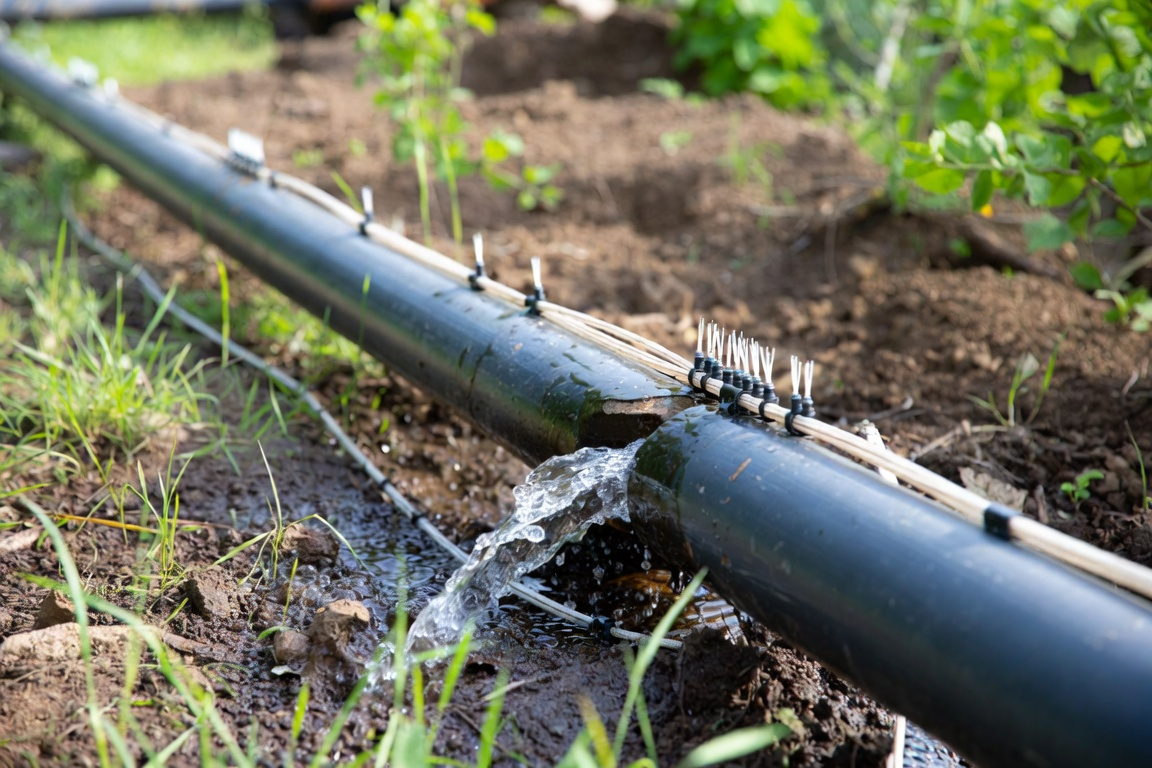
A buried water main gives very little away. Pressure sensors sit kilometers apart and only register a change once the loss is large. Acoustic loggers cover a few hundred meters and need to be moved. Surveys find leaks that were already there, months after they started, and a leak that runs for months has usually undermined the ground around it.
The gap is not detection technology. It is coverage. Between two sensors there is a stretch of pipe nobody is watching, and that is where the break happens.
How fiber optic leak detection closes the gap
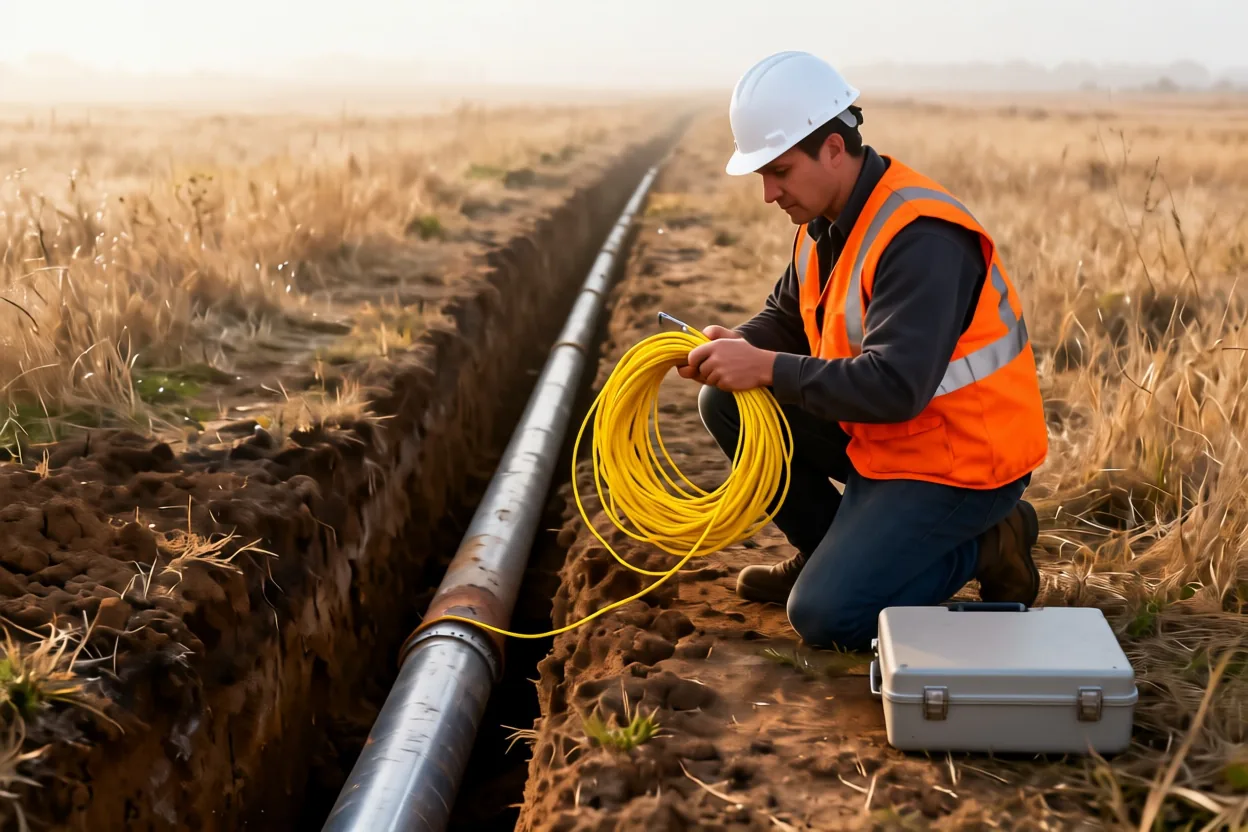
A single optical fiber laid alongside or attached to the pipe becomes thousands of measurement points. A Distributed Acoustic Sensing interrogator reads the vibration signature along the whole route continuously, with channel spacing from 0.1 m and a range of up to 50 km per channel from a single end.
An escaping jet of water is noisy. It produces a persistent, narrow-band acoustic signature very unlike the transient noise of traffic overhead or a valve operating. The system reports not only that something is leaking but where, to within a meter or so, which is the difference between excavating once and excavating four times.
What the fiber picks up besides leaks
- Third-party interference. Excavator teeth striking the pipe, or digging near it, register long before the pipe is breached.
- Pump and valve behavior. Cavitation and water hammer show up as distinct signatures.
- Illegal connections. Unauthorized taps produce a characteristic flow noise at a fixed location.
What fiber optic leak detection costs to deploy
The cable is the project. Three situations, in descending order of cost.
New build. Laying sensing fiber in the same trench as a new main adds very little. This is the cheapest fiber optic leak detection you will ever install, and the reason to raise it during design rather than after commissioning.
Existing route with spare fiber. Many utility corridors already carry telecom fiber for SCADA. A spare strand can often be used for sensing with no civil works at all.
Existing route, no fiber. This needs a cable installed along the alignment, usually by microtrenching or by pulling through an existing duct. It is the expensive case, and worth modeling against the cost of the leaks on that specific stretch rather than across the whole network.
What to expect operationally
The system runs continuously and unattended. What it produces is a stream of located events, and the work is deciding which ones matter on your network. That tuning takes a few weeks of operation with your team, because the background noise of a main under a busy road differs from one crossing farmland.
Getting the classification right is what separates a system operators trust from one they mute. It is also why we stay on site through commissioning and train the people who will read the alarms. Tuning is the part of fiber optic leak detection that no datasheet covers.
How a detection reaches the crew
The instrument reports a located acoustic event. Turning that into a repaired pipe takes a defined path, and it is worth designing before commissioning rather than after the first alarm.
A workable sequence looks like this. The system flags a persistent signature at a chainage. An operator checks it against known works and pressure data. If it holds, the location converts to a street address using the network GIS, and a crew is dispatched with a specific point to excavate rather than a zone to search.
That last step is where the saving sits. Excavating once at a located point instead of three times across a suspected stretch is usually the largest single cost avoided, ahead of the water itself.
What to measure to prove it worked
Utilities that get value from this measure it, and the useful metrics are not the obvious ones.
- Time from leak start to repair, not number of leaks found. The system’s job is compressing that interval.
- Excavations per repair. Should trend toward one.
- Leaks found before customer contact. A leak reported by a resident is a leak the system missed or nobody acted on.
- Alarms dismissed as noise. If this is not falling month over month, the classification is not being tuned.
Where fiber optic leak detection does not pay
Short distribution runs in dense urban networks with good existing acoustic coverage are not the strongest case. The economics favor long transmission mains, trunk routes crossing open ground, and any stretch where a failure undermines a road or a rail line. Those are the places where a single avoided incident covers the installation.
See the full picture on our pipeline monitoring page, or read how the same approach applies to structural health monitoring.
Talk to an Engineer and tell us what you need to monitor. We will tell you whether fiber sensing is the right fit, and how to deploy it.
Frequently asked questions
Why do leaks in water mains stay hidden for so long?
A buried main gives very little away. Pressure sensors sit kilometers apart and only register a change once the loss is large, acoustic loggers cover a few hundred meters and need to be moved, and surveys find leaks months after they started. The gap is not detection technology but coverage between sensors.
How does fiber optic leak detection work?
A single optical fiber laid alongside or attached to the pipe becomes thousands of measurement points. A Distributed Acoustic Sensing interrogator reads the vibration signature along the route continuously. An escaping jet of water produces a persistent, narrow-band acoustic signature, very unlike the transient noise of traffic or a valve operating, and the system reports where it is.
What does fiber optic leak detection cost to deploy?
The cable is the project. On a new main, laying sensing fiber in the same trench adds very little. On an existing route with spare telecom fiber, sensing can often start with no civil works at all. On an existing route without fiber, a cable has to be installed along the alignment, which is the expensive case.
Where does fiber optic leak detection not pay?
Short distribution runs in dense urban networks with good existing acoustic coverage are not the strongest case. The economics favor long transmission mains, trunk routes crossing open ground, and any stretch where a failure undermines a road or a rail line, because there a single avoided incident covers the installation.