Seismic Monitoring in Mining: Reading the Rock Before It Moves


Underground mining has an unavoidable problem: removing rock redistributes stress into the rock that remains, and that rock eventually responds. Seismic monitoring in mining exists to read that response early enough to act, and distributed fiber changes how much of the mine you can listen to at once.
The coverage problem in mine seismology
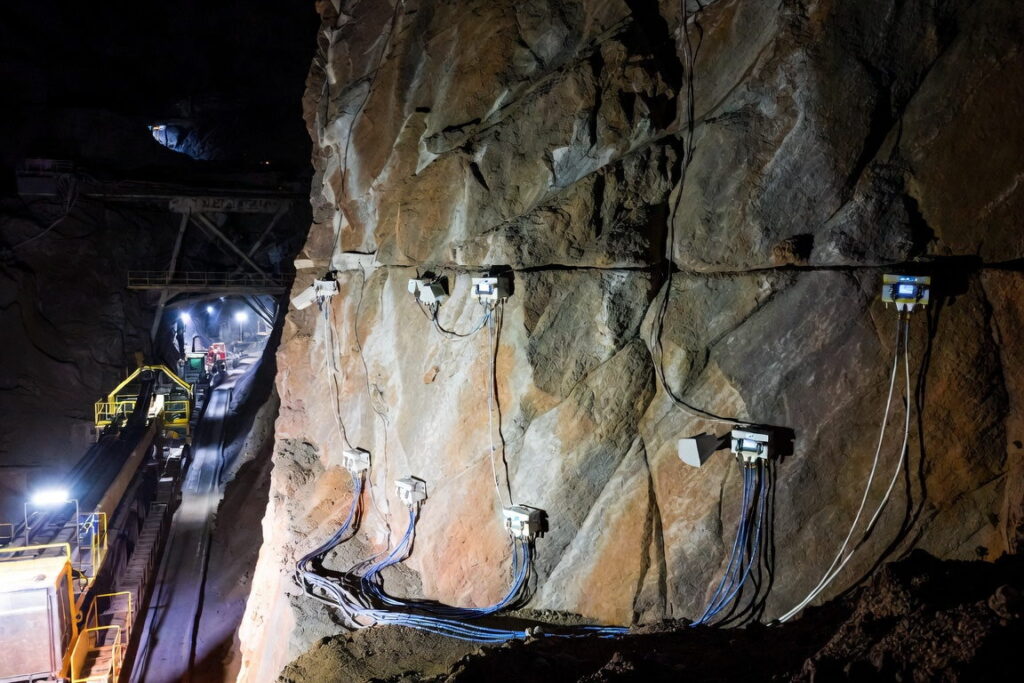
Geophone arrays have been standard for decades and they work well. They also share the constraint of every point-sensor network: each instrument needs installation, cabling and power, and it measures where it sits. Coverage is a function of budget, so arrays get concentrated around known problem areas.
Mines are not static. Development advances, stopes are extracted and stress migrates into areas that were quiet when the array was designed. The instrumented zone and the active zone drift apart.
Fiber as a continuous array for seismic monitoring in mining
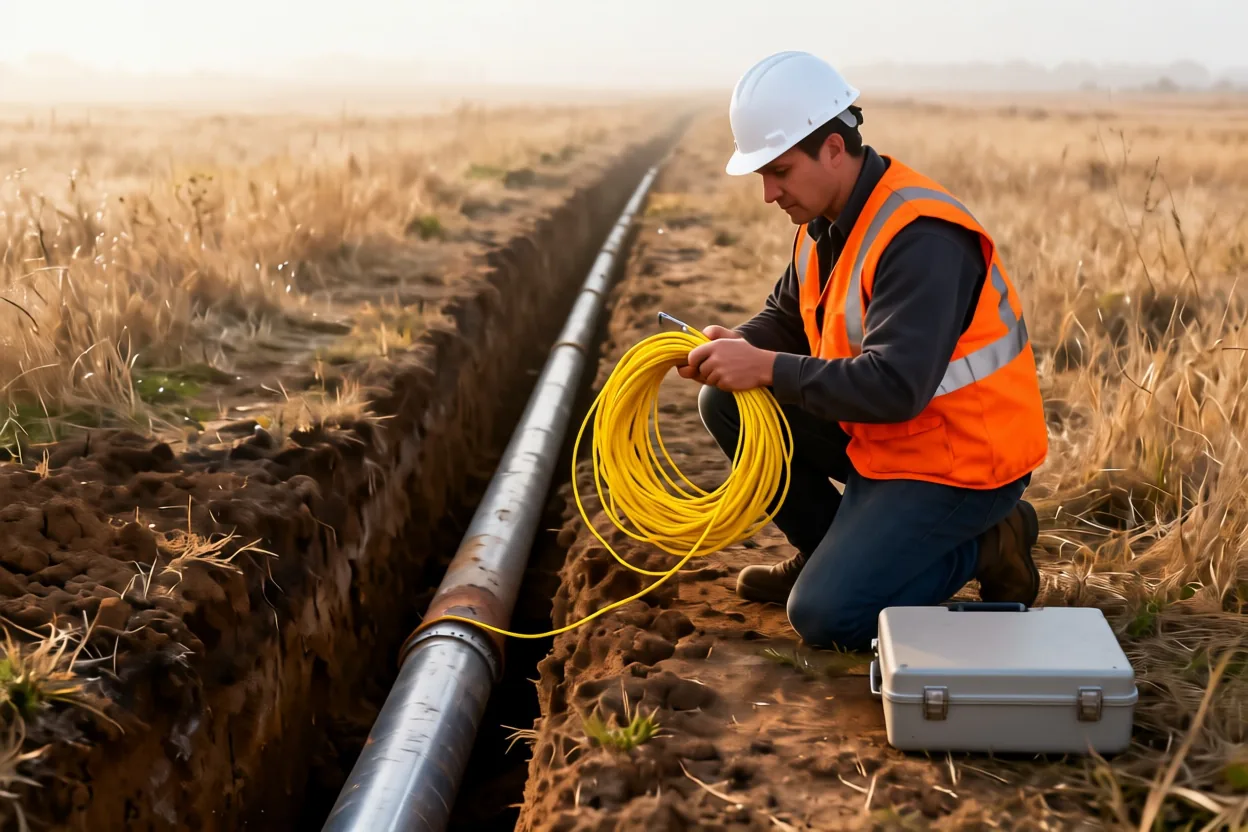
Distributed Acoustic Sensing turns a cable into thousands of sensing points, spaced as closely as 0.1 m, over as much as 50 km of fiber per channel from a single end. A cable run along a decline or through a development drive instruments the entire length, not selected stations.
For a mine this has a specific advantage: as development advances, the fiber advances with it. Extending coverage means extending cable, not designing and commissioning new instrument stations.
What it picks up
- Microseismic events, the small fracturing that often precedes larger failures.
- Blast timing and performance, measured along the whole round rather than inferred.
- Ground movement around excavations, including slow convergence.
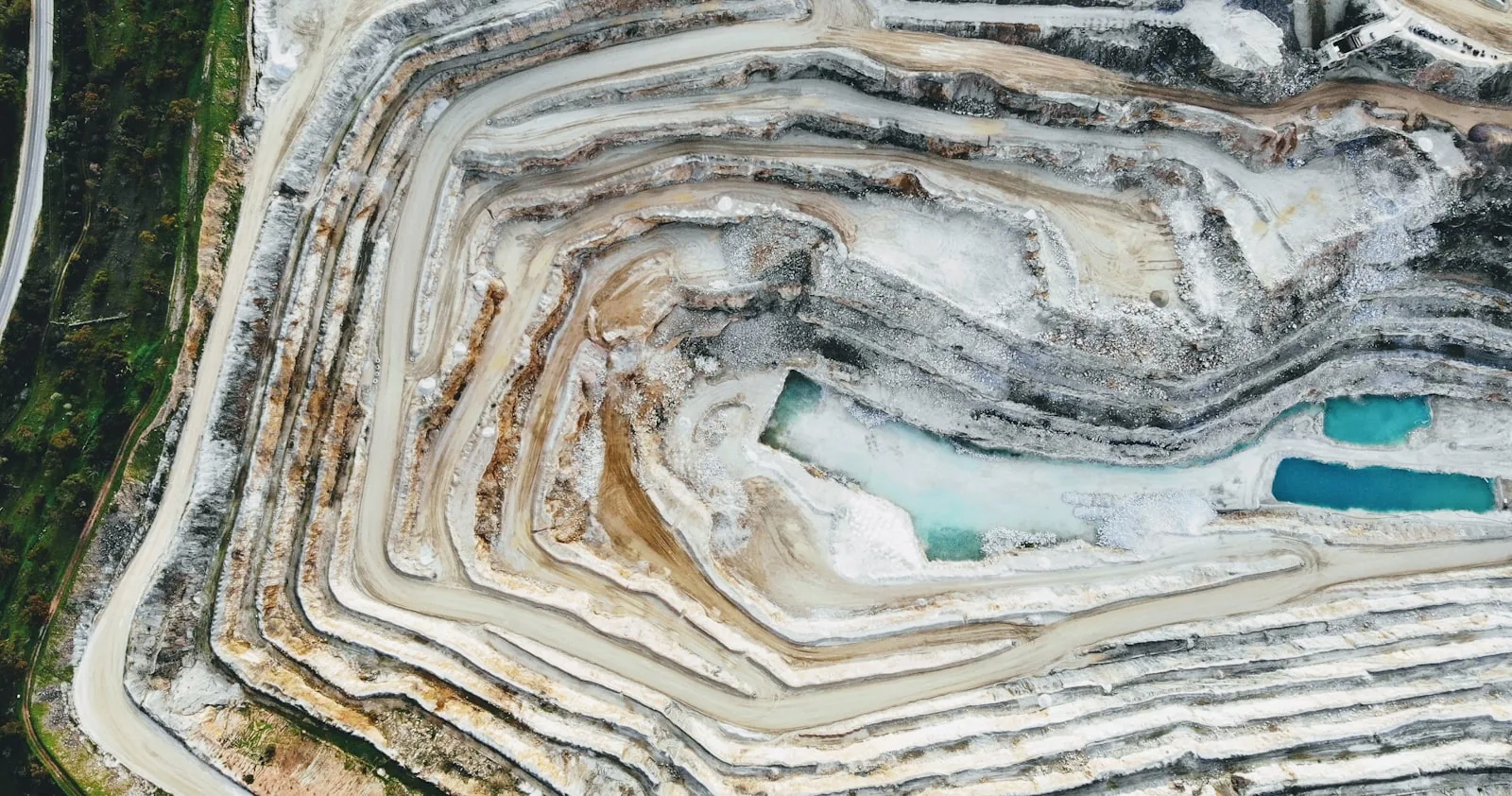
- Slope behavior in open pits, where a cable along a bench monitors the full face.
Temperature matters too
Fires and spontaneous combustion are a persistent hazard, particularly in coal (NIOSH). Distributed Temperature Sensing over the same cable route detects heating along a conveyor or in a sealed area at 0.03 °C resolution, at every meter rather than at spot detectors.
Running acoustic and thermal sensing over one cable is one of the clearer cases where a single installation covers two unrelated risks, and it materially changes the cost comparison against two separate systems.
The honest constraints on seismic monitoring in mining
Fiber sensing is not a replacement for a well-designed geophone array in every case. Geophones give three-component motion at a point, which matters for source mechanism analysis. DAS measures strain along the fiber axis, so its sensitivity depends on the direction the wave arrives from (Hendi et al., Solid Earth 2023).
The two are complementary. The realistic pattern is fiber for broad continuous coverage and event location, with geophones retained where detailed source characterization is needed. Any vendor telling you it replaces everything is selling rather than engineering.
Installing seismic monitoring in mining operations
The practical constraints are the usual ones underground: cable has to survive blasting, mobile equipment and water. Armored cable in existing services routes is the normal approach, and planning the route with the mine’s own services team is what determines whether the system survives its first year.
Cable survival underground
The engineering challenge in a working mine is not the sensing. It is keeping the cable intact in an environment designed to break things.
Blasting, mobile equipment, ground movement and water all threaten a cable run through a decline. The approaches that hold up are unglamorous: armored cable, routed with existing services rather than on its own, secured at intervals that survive vibration, and with slack at points where ground movement is expected.
Planning that route with the mine’s own services team, rather than around them, is the single largest factor in whether the installation is still working after a year.
Extending seismic monitoring in mining as the face advances
One advantage over fixed arrays deserves emphasis. As development advances, coverage extends by splicing additional cable onto the existing run, within the interrogator’s range of up to 50 km of fiber per channel.
There is no new instrument station to design, power and commission. For an operation opening new levels on a regular cycle, that difference compounds: the monitored zone keeps pace with the working zone instead of falling behind it.
Combining acoustic and thermal on one route
Where spontaneous combustion is a risk, running Distributed Temperature Sensing over a second fiber in the same cable covers a completely separate hazard for a marginal increase in installation cost. Temperature at every meter at 0.03 °C resolution detects heating in a sealed area or along a conveyor well before a spot detector placed metres away would register it.
Two unrelated risk categories, one cable installation. That combination is usually what makes the business case work for an operation weighing this against a geophone expansion.
More on mining, seismic and natural hazards, or on structural monitoring for surface infrastructure.
Talk to an Engineer and tell us what you need to monitor. We will tell you whether fiber sensing is the right fit, and how to deploy it.
Frequently asked questions
Why use fiber sensing for seismic monitoring in mines?
Geophone arrays work well, but each instrument needs installation, cabling and power, so coverage gets concentrated around known problem areas while stress migrates into zones that were quiet when the array was designed. A DAS cable run along a decline or a development drive instruments its entire length, and coverage extends by extending cable.
What can distributed acoustic sensing detect in a mine?
Microseismic events, the small fracturing that often precedes larger failures; blast timing and performance, measured along the whole round rather than inferred; ground movement around excavations, including slow convergence; and slope behavior in open pits, where a cable along a bench monitors the full face.
Does DAS replace geophones in mine seismology?
Not in every case. Geophones give three-component motion at a point, which matters for source mechanism analysis, while DAS measures strain along the fiber axis, so its sensitivity depends on the direction the wave arrives from. The realistic pattern is fiber for broad continuous coverage and event location, with geophones retained for detailed source characterization.
How does a sensing cable survive in a working mine?
The approaches that hold up are unglamorous: armored cable, routed with existing services rather than on its own, secured at intervals that survive vibration, and with slack at points where ground movement is expected. Planning that route with the mine's own services team is the single largest factor in whether the installation still works after a year.