Advanced Maritime Technology Expo & Conference, Amsterdam June 16–18, 2026


Fiber Optic Sensing and the Future of Maritime Infrastructure
Ports, subsea cables, offshore energy and the pipelines that connect them are all being instrumented at once, and the common constraint is that almost none of it is accessible. A quay wall, a cable on the seabed and a subsea pipeline share one property: sending a person to look is slow, expensive and sometimes not possible at all. That is the gap fiber optic sensing for maritime infrastructure is filling, and it is why the technology keeps appearing in maritime digitalization roadmaps.
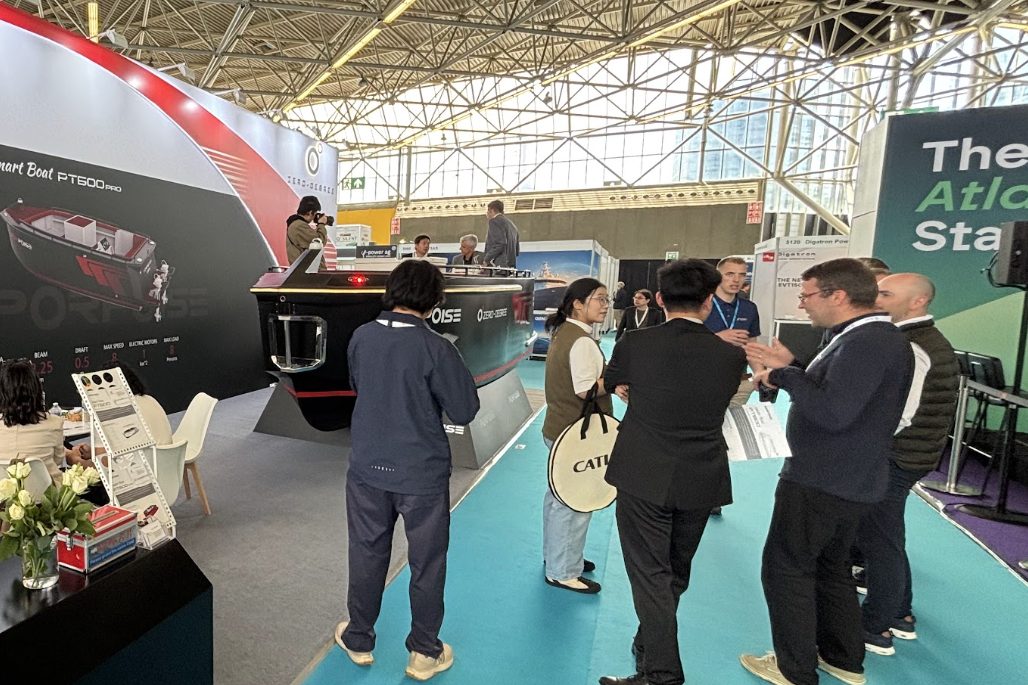
BiiSensing attended the Advanced Maritime Technology Expo & Conference at RAI Amsterdam in June, the event formed by merging the former Electric & Hybrid Marine and Autonomous Ship programs into one platform across electrification, autonomy, infrastructure and regulation.
Fiber optic sensing for maritime infrastructure starts already wired
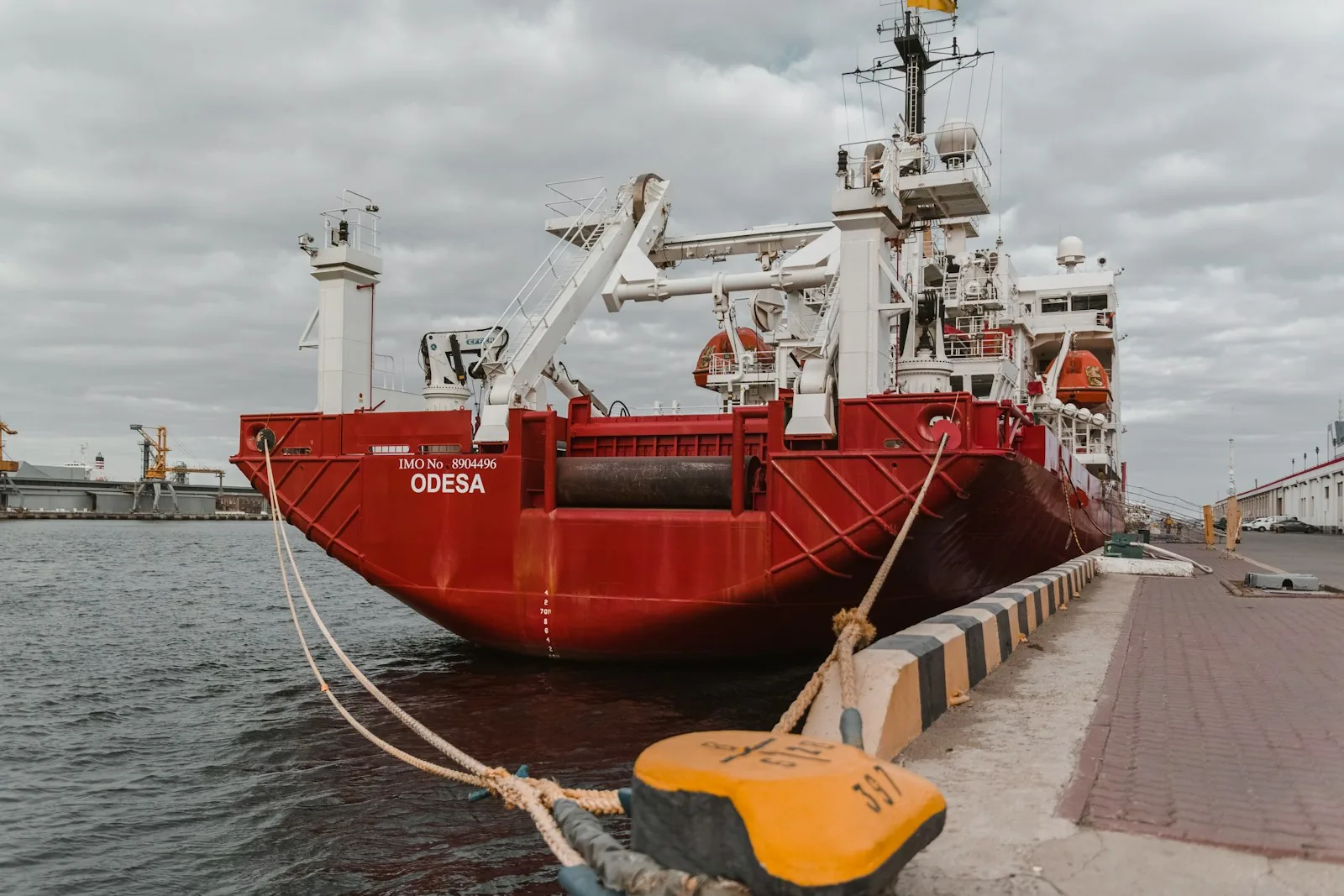
Maritime infrastructure has an advantage that most sectors do not: fiber is already there. Submarine telecom cables cross oceans. Port terminals are trenched for communications and control. Offshore platforms and wind farms are linked by export cables with fiber in the bundle. In each case, the cable was installed to carry data, and in most cases not every strand is in use.
A distributed sensing interrogator reads one of those spare strands and turns the whole run into a measurement instrument. There is no device to power in the water, no enclosure to service on a quay, and no survey vessel required to take a reading. The electronics sit in a cabinet on shore.
What fiber optic sensing for maritime infrastructure detects
Three measurements cover most of what maritime operators ask for:
Vibration and acoustics, with DAS. Our Eagle DAS reads up to 50 km of fiber per channel from a single end, 100 km with optical repeaters, at acquisition rates up to 10 kHz. On a submarine cable that resolves anchor drag, trawl gear contact and third-party activity to a position along the route. On a quayside it separates normal crane and vessel movement from an event that is not part of operations.
Temperature, with DTS. Eagle DTS resolves 0.03 °C over up to 30 km across up to 4 channels. Export cables and shore power connections fail thermally before they fail electrically, so a temperature profile along the run identifies the developing hot spot rather than the completed fault.
Strain, with DSS. Berth structures, mooring points and cable crossings move. Distributed strain gives that movement a magnitude and a location, delivered in purpose-built configurations because the coupling between cable and structure determines what the measurement means.
Where fiber optic sensing for maritime infrastructure lands
The value is not that an event is detected. It is that it is detected at a known distance, while it is still small. Three examples we see repeatedly:
- Cable protection. Most submarine cable damage is caused by fishing gear and anchors. Continuous acoustic coverage means the vessel activity above a cable is observable while it is happening, not reconstructible after the outage. We cover this in cable monitoring.
- Port continuity. A terminal cannot stop to investigate. Locating a disturbance to a berth and a meter range keeps the response proportionate. See Smart Port.
- Structural condition. Quay walls, lock gates and approach bridges accumulate damage slowly. A strain and temperature history per location turns inspection into something scheduled against evidence. See structural health monitoring.
Autonomy needs a sensed environment
One theme of the conference program is worth drawing out. Autonomous and remotely operated maritime systems are usually discussed as a problem of onboard sensing and decision-making. But an autonomous vessel arriving at a terminal is only as safe as the terminal’s own picture of itself. Fixed infrastructure that can report its own condition and detect what is happening along its length is part of the same transition, and it happens to be the part that can be retrofitted onto cable that is already buried.
What decides fiber optic sensing for maritime infrastructure on your route
The question worth asking early is not whether the technique works subsea. It is whether it works on a specific asset, and that comes down to four things we end up checking on every project:
- Spare strands, and where they terminate. A sensing interrogator needs one fiber, but it needs both ends of the story: which strands are dark, and whether they land somewhere with rack space and power.
- Fiber type and splice history. Standard single-mode is what these systems are specified against. A run with many splices, or with sections of a different fiber type, changes the achievable range.
- Coupling along the length. A cable in a duct, a cable buried in sediment and a cable resting on rock report the same event with different amplitudes. This is what determines the difference between detecting an event and quantifying it.
- What normal looks like. A port is acoustically busy. The useful baseline is not silence, it is a characterized picture of routine operations, and it takes a few weeks of recording to build.
That is the shift we think matters over the next few years: fiber stops being only a communication medium and becomes a sensing layer, without a second cable being laid.
Event details
- Event: Advanced Maritime Technology Expo & Conference
- Dates: 16 to 18 June 2026
- Venue: Hall 8, RAI Amsterdam, Netherlands
- Organizer: UKi Media & Events
Talk to an Engineer and tell us what you need to monitor. We will tell you whether fiber sensing is the right fit, and how to deploy it.